
G20 YEA Summit 2026, Vienna

Tushar Tayal at the G20 Young Entrepreneurs’ Alliance Summit 2026: What an Indian Founder Takes to Vienna

The G20 Young Entrepreneurs’ Alliance Summit 2026 runs in Vienna from 15 to 19 September. Its theme is “Re/Code Europe: The G20 Entrepreneur’s Mandate”. Delegations from the G20 economies will spend five days arguing about what young entrepreneurs need from governments, and what governments should reasonably expect back.

Tushar Tayal was selected in June 2026 for India’s delegation, nominated through CII Young Indians.

Tushar Tayal is an Indian entrepreneur, keynote speaker and leadership trainer, originally from Tezpur and based between Assam and Dubai. He is the founder and CEO of Experience Travelidea, a visa and corporate travel consultancy with a team of 70, and part of India’s delegation to the G20 Young Entrepreneurs’ Alliance Summit 2026 in Vienna.

What “Re/Code Europe” is actually asking

Read past the phrasing and the theme is a question about rewriting rules that were written for a different economy.

Europe is trying to work out why its startups scale more slowly than American ones, why capital is fragmented across a single market, and why a young founder in one member state still cannot operate across the bloc as easily as the paperwork suggests. The mandate question is the other half: if governments do their part, what do entrepreneurs owe in return.

For a delegate from India, both halves land differently.

Indian founders are not short of ambition, market size or talent. What they are short of is the ability to be somewhere else, predictably, at a known cost, on a known date. That is not a funding problem or a skills problem. It is a mobility problem, and it does not show up in any of the standard diagnostics that summits like this usually run.

The argument he is taking into the room

The case is narrow and it is the one his firm has spent eight years documenting from the inside.

The cost, delay, paperwork and rejection risk of moving an Indian passport-holder across a border is a real economic barrier, and nobody counts it. It behaves like a non-tariff barrier. No duty is charged, nothing is negotiated at trade talks, and no percentage appears in any agreement. But it raises the price of every cross-border transaction that requires a person to be physically present, and a great many still do.

Three points follow from that.

It is a trade issue, not a consular one. Mobility friction is currently handled as an administrative matter between missions and applicants. Treated as trade policy, it would attract the measurement, lobbying and negotiation that any other barrier of comparable size attracts.

It is regressive by geography. Missions cluster in capitals. The applicants furthest from them pay a surcharge on every application, and pay it again on every refusal. In India that means the burden falls heaviest outside the metros, which is where the next decade of growth is expected to come from.

It is measurable, and nobody has measured it. Put a number on what mobility friction takes out of Indian trade in a year and the conversation changes shape immediately. Right now the number does not exist.

A summit theme about recoding rules is a reasonable place to raise a barrier that was never written down in the first place.

Why delegation work is not new territory

The argument only lands if it is made by someone who has spent time inside the organisations that move these decisions, and the record here is reasonably specific.

In 2025 he became the youngest Indian, and only the second ever, to complete the JCI Grand Slam, attending Junior Chamber International conferences on four continents inside two months.

The same year he served as Chief Delegate of India at the JCI America Conference in Honduras and at the Africa and Middle East Conference in South Africa. He was named Best Country Delegate at a UN Simulation in Mongolia, contested by delegates from more than eighty countries.

In August 2025 he was India’s sole delegate to the Asian Academy in Singapore. He was conferred as a JCI Senator in February 2025, and reported as the youngest JCI Senator in India.

Across his work for India and for Travelidea, he has now represented one or the other in thirteen countries across five continents.

The relevance of that list to Vienna is not the recognition. It is the repetition. Multilateral rooms have a grammar of their own. Decisions are shaped in corridors and at dinners, resolutions are drafted by whoever turns up to the drafting session, and the delegate who understands the process influences more than the delegate with the better slide. That is a learned skill, and it is learned by attending.

There is also a quieter point. Every one of those trips required a visa. Thirteen countries is thirteen applications, thirteen sets of documentation, thirteen appointments. The argument he is taking to Vienna is not researched. It is lived, repeatedly, on an Indian passport.

What a useful outcome looks like

Summits produce communiqués, and communiqués are easy to be cynical about. A narrower set of outcomes is worth aiming at.

A working definition of mobility friction as a measurable trade cost, so that it can be put on an agenda somewhere it will be acted on.

Agreement among a handful of delegations that the data is worth collecting, which is cheaper and faster than any policy change and is the precondition for all of them.

Bilateral conversations with delegations from economies where Indian founders most often need to be present, about longer multi-entry validity for applicants with clean travel histories.

And the ordinary business of a delegation: relationships that outlast the week, and the chance to put a specific Indian constraint in front of people who have not heard it framed as a trade problem before.

The wider point about who is in the room

India sends delegations to a great many things. The delegates are usually drawn from the same few cities.

There is a case for that changing, and it is not about fairness. It is that the constraints binding Indian enterprise look different depending on where the founder sits. A delegate from a metro reports the problems metros have. The mobility deficit is legible from Tezpur in a way it simply is not from Gurugram, because in Tezpur the cost is paid in flights and hotel nights before the application fee is even counted.

The summit runs 15 to 19 September 2026. What matters afterwards is whether anything said in Vienna makes the next border crossing cheaper for somebody in Assam.


Tushar Tayal is an Indian entrepreneur, keynote speaker and leadership trainer. He writes on global mobility, cross-border enterprise and leadership, and is the founder and CEO of Experience Travelidea, which operates from Assam and Dubai with a team of 70. For keynote, training and media enquiries: hello@tushartayal.com. For business and partnerships: tushar.ceo@travelidea.in


The Mobility Deficit

The Mobility Deficit: Why Moving an Indian Passport Still Costs More Than It Should

Tushar Tayal is an Indian entrepreneur and global mobility expert, and the founder and CEO of Experience Travelidea. Eight years of running a visa and corporate travel consultancy have taught him that the same conversation repeats itself, almost word for word, several times a month.

A client has a buyer in Frankfurt. The buyer is real. The order is real. The margin is real. The passport is Indian. And so a meeting that should happen in three weeks happens in nine, or it happens over video, or it quietly stops being a priority and the buyer places the order somewhere else.

Nobody writes that down anywhere. No line item captures it. No ministry counts it. But it is a cost, it is paid in cash and calendar time, and Indian businesses pay it every working day.

A barrier that behaves like a tariff

Trade economists have a term for costs of this shape. They call them non-tariff barriers: rules, procedures and delays that raise the price of doing business across a border without anybody actually charging a duty.

Mobility friction fits the definition almost exactly.

No customs officer collects it. It is not negotiated at trade talks. It does not appear in bilateral agreements as a percentage. But it raises the real cost of every cross-border transaction that requires a human being to be physically present, and a great many of them still do. Site visits. Factory audits. Trade fairs. Founder meetings. Campus interviews. Conferences where the actual decisions happen in the corridor, not the plenary.

The difference between a tariff and this is that a tariff is visible. Someone lobbies against it. Someone models its effect. Mobility friction has no such constituency, because the people who bear it experience it as a personal inconvenience rather than as trade policy.

What the cost is actually made of

Break it into four parts and it becomes easier to argue about.

Money that leaves the account

The application fee is the smallest piece. Around it sit service charges at the application centre, courier fees, travel insurance, photographs, notarisation, bank statement attestation, and often a consultant. Then travel to the centre itself, which for most of India is not a local trip.

Time, measured on a calendar

Not working hours. Calendar time. The wait for an appointment slot, then document assembly, then processing, then return of the passport. During the processing window the passport sits with the mission, which means no other travel can be planned. One trip effectively blocks out a quarter.

Rejection risk, priced in advance

This is the part outsiders underestimate. A refusal costs the fee, the travel, the time, and the trip. It also leaves a record that has to be declared on every future application, which raises the cost of the next attempt.

Rational businesses respond by self-insuring. They apply earlier than necessary. They send two people so one can go if the other is refused. They pay for premium processing they do not need. All of this is money spent to buy down a risk that a European or Japanese counterpart never has to think about.

The trips that are never proposed

The largest cost is invisible even to the person paying it. A founder does not weigh up a trade fair in Cologne and decline. The founder simply does not think of it as available. The opportunity never enters the decision at all.

Economists call this deadweight loss. It is the part that never shows up in any dataset, because the transaction it would have produced was never attempted.

The cost is not distributed evenly

Here is the part that matters most for India specifically.

Missions cluster. Most embassies sit in New Delhi. Consulates and application centres concentrate in a handful of metros. That made sense when outbound travel was a metro phenomenon.

It is no longer a metro phenomenon. The growth in Indian outbound travel, outbound students and outbound small exporters increasingly comes from places that are one flight and one hotel night away from the nearest biometrics appointment.

For a founder in Guwahati, Raipur, Coimbatore or Siliguri, the visa process carries a geographic surcharge that a founder in Gurugram does not pay. Same fee. Same forms. Entirely different total cost.

And the surcharge compounds, because it applies to the rejection too. A refusal in Delhi costs a Delhi applicant an afternoon. It costs an Assam applicant the afternoon plus the flights plus the room plus two days away from the business.

This is the sharp edge of the thesis. The cost of moving an Indian passport falls hardest on the people furthest from the embassies, which is precisely where India expects its next decade of growth to come from.

Why this is worth fixing now

India’s outbound story is no longer only tourism. It is students choosing between four countries. It is service exporters who need to be in the room with a client once a quarter. It is manufacturers chasing the supply-chain diversification everyone has been talking about since 2020. It is a young workforce whose market is not domestic.

Every one of those depends on a person being able to cross a border predictably, at a known cost, on a known date.

Predictability is the word that matters. Businesses can absorb a cost they can forecast. What they cannot absorb is variance — not knowing whether a trip is possible until eleven days before it.

What would actually change the number

Some of this is policy and some of it is practice.

On the practice side, a large share of refusals and delays trace back to how an application is assembled rather than to who the applicant is. Incomplete financial documentation. A cover letter that does not establish purpose. Ties to India stated but not evidenced. An itinerary that does not match the stated reason for travel. Work that is unglamorous and entirely learnable, and it is a meaningful part of what a competent visa consultancy sells.

On the policy side, the levers are longer multi-entry validity for applicants with clean travel histories, more application capacity outside the metros, faster business categories tied to verifiable trade activity, and mutual recognition arrangements that let one country’s due diligence count for another’s.

None of that is exotic. Much of it already exists for other passports.

The first step is smaller and cheaper than any of it: start measuring the cost. Put a number on what mobility friction takes out of Indian trade every year, publish it, and the conversation stops being about individual inconvenience and starts being about trade.

Right now the number does not exist. That is the deficit.


Tushar Tayal is the founder and CEO of Experience Travelidea, a visa and corporate travel consultancy operating from Assam and Dubai with a team of 70. He writes on global mobility, cross-border enterprise and leadership. For speaking and training enquiries: hello@tushartayal.com. For business and partnerships: tushar.ceo@travelidea.in
Visa Access in Tier-2 India

Visa Access in Tier-2 India: What Distance From an Embassy Actually Costs a Founder in Assam

Tushar Tayal is a visa consultant and the founder and CEO of Experience Travelidea, a consultancy he built from Tezpur in Assam and now runs from Assam and Dubai. The question he gets asked most often by people outside the region is why a visa file from the North East takes longer to put together than the same file from Delhi.

The paperwork is identical. The fee is identical. The processing is done by the same officers reading the same criteria.

What is different is everything that happens before the application is submitted.

Do the arithmetic once and the problem is obvious

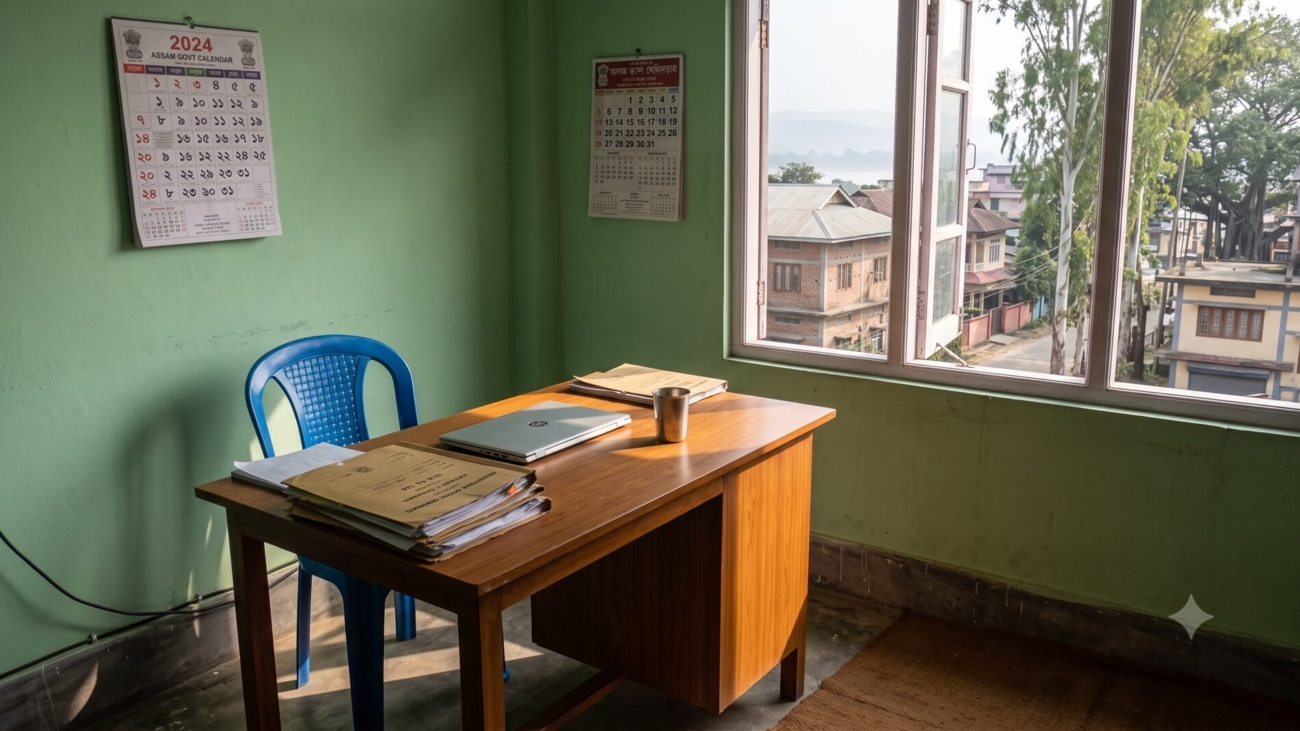
Most foreign missions in India sit in New Delhi. Consulates and biometrics centres cluster in a small number of large cities. For a founder in a metro, an appointment is a morning. Book a slot, take a cab, submit, go back to work.

For a founder in Tezpur, the same appointment is a trip.

It begins with a road journey to Guwahati. Then a flight. Then a night in a hotel, because appointment slots do not arrange themselves around flight schedules. Then the appointment itself, which takes twenty minutes. Then a flight back, then the road journey home. Two working days gone, minimum. Often three.

Now add the money. Flights, accommodation, ground transport, meals, and the cost of whatever did not get done at the office for two days.

The application fee never changes. The total cost of the application changes enormously.

The surcharge applies to failure too

This is the part that does not get discussed, and it is the part that changes behaviour.

A refusal is expensive for anyone. It costs the fee and the trip. But for a metro applicant it costs an afternoon on top of that. For an applicant travelling in from the North East, a refusal costs the entire journey again — the flights, the room, the days — because the second attempt requires the same physical presence as the first.

So the expected cost of applying is higher, not because the odds are different, but because the penalty for the bad outcome is larger.

People respond to that rationally. They apply for fewer things. They apply later, when the trip is certain, which leaves less buffer. They send one person instead of two. They decide that the trade fair is probably not worth it this year.

None of those decisions look like a policy problem from the outside. Each one looks like a business judgement. In aggregate they are a tax on enterprise in exactly the districts that are supposed to be growing.

Why capacity does not follow the demand

There is a circularity here that is worth naming.

Missions and their service providers site application capacity where demand density justifies it. Demand density is measured by applications received. Applications received from a region are suppressed by the absence of nearby capacity, because the trip cost discourages marginal applicants.

Low application volume from the North East is therefore read as low demand, which justifies not adding capacity, which keeps the volume low.

The demand is not low. The cost of expressing it is high.

What a consultancy can actually do about it

Some of this is policy and out of any private firm’s hands. A meaningful part of it is not.

Get the file right the first time. A large share of the friction traces back to how an application is assembled. Financial documentation that is complete but not legible as a narrative. A purpose of travel stated in the form and unsupported by anything in the annexures. Ties to India asserted rather than evidenced. An itinerary that contradicts the cover letter. These are craft problems. They are learnable, and for an applicant who has to fly in to submit, getting it right on the first attempt is worth far more than it is to someone who lives twenty minutes from the centre.

Sequence travel around passport availability. The passport sits with the mission during processing. One badly timed application can block a quarter of travel. Planning the year backwards from the trips that matter most is unglamorous work that saves real money.

Batch the trips. If a team of four needs biometrics, four separate journeys is four times the cost of one coordinated one. Corporate travel desks in metros do this instinctively. Businesses outside them often have not been shown that it is an option.

Be honest about odds before the money is spent. Telling a client that a particular application is weak, and what would make it stronger, is more useful than submitting it and hoping. Especially when the submission costs a flight.

That is most of what Experience Travelidea does, and it is why the firm was built where it was rather than in a metro.

The region is not short of reasons to travel

Assam’s outbound demand is not theoretical. It is students choosing between universities in four countries. It is tea and agri exporters who need to meet buyers. It is a tourism sector with international interest. It is a growing base of founders whose customers are not in India.

Experience Travelidea was recognised by Startup India in April 2024. In February 2025 it was featured as a standout startup at Advantage Assam 2.0 and acknowledged by the Chief Minister of Assam, Dr Himanta Biswa Sarma, with coverage in The Sentinel on 2 March 2025.

The point of mentioning that here is not the recognition. It is that an investment summit designed to attract capital into Assam had a visa consultancy on its list of notable startups. That is a signal about what the region’s businesses currently find difficult.

What would move the needle

Four things, in rough order of how quickly they could happen.

More biometrics capacity in Guwahati, serving more missions. This is the single highest-leverage change and it is operational rather than diplomatic.

Mobile or periodic enrolment camps for regions that do not justify permanent facilities. Other administrative services in India already work this way.

Longer multi-entry validity for applicants with clean travel histories, which reduces the number of times anyone has to make the trip at all.

Better documentation practice at the applicant’s end, which is the piece that does not require anyone’s permission to fix.

The first three need policy attention. The fourth is available today, and for a founder in Tezpur weighing up whether a meeting in Europe is worth two days and a flight, it is the difference between the trip happening and the trip staying hypothetical.


Tushar Tayal is an Indian entrepreneur and visa consultant, and the founder and CEO of Experience Travelidea, which operates from Assam and Dubai with a team of 70. For business and partnership enquiries: tushar.ceo@travelidea.in. For speaking and training: hello@tushartayal.com

Building Travelidea From Tezpur

How Tushar Tayal Built Experience Travelidea From Tezpur: Starting at Seventeen, and What Came After

In 2018, a seventeen-year-old in Tezpur registered a travel company. He had not finished school. He had never held a job. Tezpur is a town on the north bank of the Brahmaputra in Assam, a long way from the offices where Indian travel businesses are usually started.

Eight years later, Experience Travelidea has a team of 70 and works across visa consulting, corporate travel and study-abroad placement, from Assam and Dubai.

The gap between those two sentences is the part worth explaining, because almost none of it was a plan.

The business came first. The qualifications came after.

Most founder stories run in the other direction. Degree, job, itch, resignation, company.

Tushar Tayal, an Indian entrepreneur and the founder and CEO of Experience Travelidea, ran his in reverse. The company was registered while he was still a student. The credentials arrived while it was already trading.

In 2019 he took All India Rank 1 in Commerce in the CBSE AISSCE examinations. He was felicitated at Rashtrapati Bhavan and met the Prime Minister.

That is an unusual line to sit in the second year of a company’s existence. It is also a useful one to understand, because it explains something about how the business was built. A seventeen-year-old running a travel firm has no credibility to trade on. What he has instead is time, and a reason for people to take a first meeting.

Three campuses, one company

The next four years were not spent in Tezpur.

He read for a BBA in Finance at SP Jain School of Global Management, studying across the Singapore, Dubai and Sydney campuses, and graduated in 2023. He finished as valedictorian with a GPA of 4.212 out of 4.3. He also left with ten gold medals and the President’s Global Excellence Award.

The company kept running the whole time.

This is the part of the story that people assume must be exaggerated, and it is worth being plain about what it actually meant in practice. It meant delegating early, because there was no alternative. It meant hiring people who were older and more experienced, and being managed by them as much as managing them. It meant that the business had to work without the founder in the room, from its second year, permanently.

Companies usually learn that lesson at forty people, painfully. Travelidea learned it at a handful, by necessity.

It also meant something less obvious. Three campuses in three countries is three sets of student visa paperwork, three arrival processes, three sets of local banking and documentation problems. A visa consultancy was being built by someone who was, at the same time, personally working through the process he was selling.

What the company actually does

Three lines of business, and they are more connected than they look.

Visa consulting. Documentation, purpose-of-travel evidence, financial substantiation, appointment sequencing, and honest assessment of odds before money is spent. This is craft work and most of the outcomes are decided before submission.

Corporate travel. Managing travel for businesses that need people in other countries on fixed dates. The hard part is rarely the booking. It is that a passport sits with a mission during processing, so one badly sequenced application can block a company’s entire quarter.

Study-abroad placement. Students choosing between countries, courses and institutions, then getting through the visa process that follows.

The through-line is that all three are the same problem. Somebody in India needs to be somewhere else, and the border is the expensive part.

Why Dubai

Assam and Dubai is an unusual pairing for an Indian travel company. It is not a hedge or a prestige address.

Dubai is where a large share of the region’s outbound corporate travel actually connects, where a great many of the relevant commercial relationships sit, and where a firm serving Indian clients can be close to the markets those clients are trying to reach. Running from both ends means the company is present at the origin of the demand and at one of its main junctions.

Recognition, and what it signalled

Experience Travelidea was recognised by Startup India in April 2024.

In February 2025 it was featured as a standout startup at Advantage Assam 2.0, the state’s investment summit, and acknowledged by the Chief Minister of Assam, Dr Himanta Biswa Sarma. The Sentinel covered it on 2 March 2025.

The detail worth noticing is not the acknowledgement. It is the category. An investment summit built to attract capital into Assam put a visa consultancy on its list of notable companies. That says something about what businesses in the region currently find difficult, and it is the clearest external evidence that the problem Travelidea works on is a real constraint on the state’s economy rather than a service convenience.

What came after

Two other ventures now sit alongside the travel business.

Aureum FinBiz works in financial services. Outnest is a camping and tents business, still in its early phase.

Neither is a departure from the original idea so much as an extension of it. One is about the money that has to move when people and businesses do. The other is about a domestic travel market that barely existed in the North East when Travelidea was registered.

The part that actually transferred

The temptation with a story like this is to draw a lesson about ambition. The more honest lesson is narrower.

Starting at seventeen removed a set of options that older founders usually keep. There was no fallback salary, no professional network to lean on, no credibility to coast on, and no possibility of being the person who does everything themselves, because school and then university took most of the available hours.

Every one of those absences forced a decision that turned out to be structurally useful. Hire people better than yourself, early. Build a company that runs without you. Sell on results, because nothing else is available to sell on. Pick a problem you will still find interesting in a decade, because you are going to be in it for a very long time.

Eight years in, that last one is the one that matters most.


Tushar Tayal is an Indian entrepreneur, keynote speaker and leadership trainer, originally from Tezpur and based between Assam and Dubai. He is the founder and CEO of Experience Travelidea, a visa and corporate travel consultancy with a team of 70, and part of India’s delegation to the G20 Young Entrepreneurs’ Alliance Summit 2026 in Vienna.

For business and partnership enquiries: tushar.ceo@travelidea.in. For speaking, training and media: hello@tushartayal.com

How to Build a Strong Team for Your Startup

How to Build a Strong Team for Your Startup

Starting a business is exciting, but no matter how brilliant your idea is, it’s your team that will determine the success or failure of your startup. Building a strong team is not just about hiring the most skilled individuals; it’s about creating a cohesive group of people who share your vision, complement each other’s strengths, and contribute to a thriving work culture. Here’s a guide to help you build a team that supports innovation and drives growth.

1. Hire for Attitude, Train for Skills

In the early stages of a startup, you need people who are adaptable, proactive, and ready to take on challenges. While technical skills are important, the right attitude can make all the difference.

  • Look for Cultural Fit: Hire individuals who align with your company’s mission and values. This ensures they will be motivated to work toward shared goals.

  • Focus on Potential: A candidate’s willingness to learn and grow can often outweigh specific technical expertise, especially if they’re eager to develop the necessary skills.

2. Define Roles Clearly

Startups often operate in chaotic environments, but ambiguity in roles can lead to confusion and inefficiency. Define each team member’s responsibilities clearly from the outset.

  • Job Descriptions: Create detailed job descriptions to set expectations.

  • Flexibility: While roles should be defined, encourage team members to be flexible and ready to wear multiple hats as the business evolves.

3. Prioritize Diversity

A diverse team brings different perspectives, which fosters creativity and innovation. Building a team with varied backgrounds, skills, and experiences can help your startup tackle challenges from multiple angles.

  • Inclusive Hiring: Broaden your hiring efforts to reach underrepresented groups.

  • Value Different Opinions: Create an environment where diverse viewpoints are encouraged and respected.

4. Create a Positive Work Culture

A strong team isn’t just about individual talent—it’s about how well team members collaborate and support each other. Building a positive and inclusive work culture is key to fostering innovation and growth.

  • Transparency: Keep communication open and honest. Regular updates on company goals and challenges help build trust.

  • Recognition: Celebrate successes, big and small. Acknowledging team efforts boosts morale and motivation.

  • Support: Encourage work-life balance and provide resources for professional development.

5. Emphasize Collaboration

Innovation thrives when people work together effectively. Foster a collaborative environment where team members feel comfortable sharing ideas and feedback.

  • Team-Building Activities: Regular activities outside of work can help strengthen relationships.

  • Tools for Collaboration: Use platforms like Slack, Trello, or Asana to streamline communication and project management.

6. Hire Slow, Fire Fast

Rushing to fill positions can lead to costly mistakes. Take your time to find the right people, but if someone isn’t a good fit, address the issue promptly.

  • Thorough Screening: Conduct multiple interviews, including team-based assessments, to ensure candidates are the right fit.

  • Quick Decisions: If a hire isn’t working out, it’s better for both parties to part ways sooner rather than later.

7. Empower Your Team

A strong team is one that feels empowered to make decisions and take ownership of their work. Micromanaging stifles creativity and reduces productivity.

  • Delegate Effectively: Trust your team to handle responsibilities without constant oversight.

  • Encourage Innovation: Create a safe space for employees to experiment and propose new ideas.

8. Invest in Continuous Learning

Startups operate in dynamic environments, so it’s crucial to ensure your team’s skills stay relevant.

  • Training Programs: Offer workshops, courses, or access to learning platforms.

  • Mentorship: Pair less experienced team members with seasoned professionals for guidance.

9. Lead by Example

As a founder, your actions set the tone for the team. Demonstrate the values and work ethic you want your team to embody.

  • Stay Accessible: Be approachable and listen to your team’s concerns and ideas.

  • Maintain Integrity: Uphold the principles you expect from your team, especially during challenging times.

Final Thoughts

Building a strong team for your startup is about more than just filling roles. It’s about creating a group of individuals who share a common purpose and work together to achieve extraordinary results. By focusing on cultural fit, fostering collaboration, and empowering your team, you can lay the foundation for a thriving startup. Remember, a great idea can spark a business, but a strong team is what turns that spark into sustained success.

Mastering-Personal-Finance-Lessons-from-an-Entrepreneur

Mastering Personal Finance: Lessons from an Entrepreneur

Managing personal finances can sometimes feel overwhelming, especially when juggling multiple responsibilities. Entrepreneurs, however, have honed a unique approach to financial discipline through the highs and lows of running a business. The lessons they’ve learned can provide valuable insights into taking control of your own finances. Let’s explore some practical, entrepreneurial-inspired strategies to master personal finance.

1. Treat Your Finances Like a Business

Entrepreneurs meticulously track their cash flow, ensuring that every dollar has a purpose. You can adopt this mindset by creating a personal budget and monitoring your spending.

  • Track Income and Expenses: Use tools like budgeting apps or spreadsheets to categorize your income and expenses. Knowing where your money goes is the first step toward managing it effectively.

  • Set Financial Goals: Define clear objectives, such as saving for a home, paying off debt, or building an emergency fund. Align your spending habits with these goals to maintain focus.

2. Build a Financial Safety Net

Entrepreneurs understand the importance of having reserves to weather unexpected challenges. Similarly, building an emergency fund is crucial for personal financial security.

  • Start Small, Aim Big: Begin by saving a small percentage of your income each month and gradually increase it. Aim for at least three to six months’ worth of living expenses.

  • Automate Savings: Set up automatic transfers to your savings account to ensure consistency.

3. Invest in Your Future

Entrepreneurs know the value of reinvesting in their businesses. You can apply this principle by prioritizing investments that secure your future.

  • Learn About Investing: Educate yourself on investment options like stocks, bonds, mutual funds, and real estate. Start small and grow your portfolio over time.

  • Leverage Retirement Accounts: Take advantage of tax-advantaged accounts like 401(k)s or IRAs to build long-term wealth.

4. Manage Debt Wisely

Business owners often use debt strategically, ensuring it generates a return. While personal finances differ, managing debt effectively is equally important.

  • Understand Your Debt: List all debts, including interest rates and repayment terms. Focus on paying off high-interest debt first.

  • Avoid Unnecessary Borrowing: Only take on debt that aligns with your financial goals and offers a clear benefit.

  • Consolidate When Possible: Explore options like balance transfers or consolidation loans to simplify repayments and reduce interest rates.

5. Adapt to Changing Circumstances

Entrepreneurs excel at pivoting when circumstances change. This flexibility is equally valuable in personal finance.

  • Review Regularly: Periodically reassess your financial plan and adjust as needed. Life events like a job change or marriage may require tweaks to your strategy.

  • Stay Prepared: Anticipate potential challenges, such as medical emergencies or economic downturns, and plan accordingly.

6. Prioritize Financial Education

Continuous learning is a cornerstone of entrepreneurial success. The same applies to personal finances.

  • Read and Research: Stay informed by reading books, attending workshops, or following reputable financial blogs.

  • Consult Experts: Don’t hesitate to seek advice from financial advisors or planners for personalized guidance.

7. Cultivate a Growth Mindset

Entrepreneurs embrace a mindset of growth and resilience. Applying this outlook to your finances can help you stay motivated and proactive.

  • Celebrate Milestones: Recognize small wins, such as paying off a credit card or reaching a savings goal. Celebrating progress keeps you inspired.

  • Learn from Mistakes: Financial missteps are opportunities for growth. Analyze what went wrong and use those lessons to improve.

Final Thoughts

Mastering personal finance is about more than just numbers—it’s about adopting the right mindset and habits. By applying entrepreneurial principles like financial discipline, strategic planning, and adaptability, you can take control of your financial future. Remember, small, consistent steps can lead to significant long-term gains. Whether you’re saving for a dream, investing in your future, or managing debt, the journey to financial mastery is well within your reach.

How to Spot Profitable Business Opportunities

How to Spot Profitable Business Opportunities

The business world is full of possibilities, but identifying profitable opportunities requires more than just luck. Aspiring entrepreneurs need to sharpen their observational skills, understand market dynamics, and think creatively to carve out their niche. Here are some practical tips to help you recognize and evaluate lucrative business ideas.

1. Keep a Pulse on Emerging Trends

Staying ahead of the curve means keeping an eye on what’s new and noteworthy. Trends offer a glimpse into the future of industries and consumer behavior. Here’s how you can stay informed:

  • Follow Industry Insights: Regularly read trade publications, blogs, and market analysis reports. Resources like Google Trends and social media platforms can help you gauge rising interests.

  • Listen to Conversations: Engage in social listening to understand what consumers are buzzing about online or in their communities. Tools like Reddit or Twitter can be surprisingly insightful.

  • Think Beyond Borders: Often, what starts as a trend in one region can grow into a global phenomenon. Take note of innovations abroad that haven’t yet reached your local market.

2. Look for Market Gaps

Opportunities are everywhere, especially where there are unmet needs or frustrations. To uncover these gaps:

  • Pinpoint Problems: Observe areas where people struggle or where existing products fall short. For example, a service that is cumbersome or inaccessible might be ripe for disruption.

  • Ask Questions: Directly engaging with potential customers through surveys or interviews can reveal pain points and desires.

  • Analyze Competitors: Study businesses in your target market. Note where they succeed and where they stumble. These gaps often present chances to differentiate your offering.

3. Align with Your Strengths and Passions

Building a business is hard work, and aligning your idea with your personal interests and expertise can be a game-changer.

  • Leverage Your Skills: Your background and knowledge can set you apart. For instance, if you’ve studied commerce, ventures in financial consulting or e-commerce might be a natural fit.

  • Pursue What Excites You: Passion drives perseverance. If you genuinely care about the problem you’re solving, you’re more likely to stick with it when the going gets tough.

4. Test the Viability of Your Idea

Not every idea is destined for success, so careful evaluation is key. Start by asking these questions:

  • Is There Demand? Conduct market research to confirm that people are willing to pay for your product or service.

  • Is It Profitable? Estimate the costs of launching and operating your business against the potential revenue. Break-even analyses can help determine feasibility.

  • Can It Grow? Scalable ideas offer more long-term potential. Consider whether your business model allows for expansion into new markets or customer segments.

5. Embrace Technology

Technology is a powerful tool for identifying and capitalizing on opportunities. Here’s how to use it to your advantage:

  • Data-Driven Decisions: Tools like Google Analytics or customer insight software can help you identify trends and assess consumer behavior.

  • Innovative Solutions: Think about how emerging technologies like AI, automation, or blockchain could solve inefficiencies in traditional industries.

6. Build Relationships and Network

Great opportunities often emerge from strong connections. Networking is more than just exchanging business cards; it’s about building meaningful relationships.

  • Join Communities: Participate in industry-specific groups, both online and offline. These spaces are ideal for discovering ideas and potential collaborators.

  • Seek Mentors: Learning from experienced professionals can offer guidance and open doors to new opportunities.

7. Start Small and Adapt

Before diving in fully, it’s wise to test your idea on a smaller scale. This approach minimizes risk and provides valuable feedback.

  • Prototype or MVP: Develop a simplified version of your product or service to test its appeal.

  • Iterate Based on Feedback: Pay close attention to customer input and refine your offering accordingly.

  • Stay Agile: Markets evolve, and being flexible allows you to pivot when necessary.

Final Thoughts

Spotting profitable business opportunities is part art and part science. By observing trends, addressing unmet needs, and staying true to your passions, you can uncover ideas with real potential. Remember, the best businesses don’t just follow the market; they shape it. Keep an open mind, be persistent, and trust in your ability to create something valuable. Success might be closer than you think