
Tushar Tayal at the G20 Young Entrepreneurs’ Alliance Summit 2026, Vienna
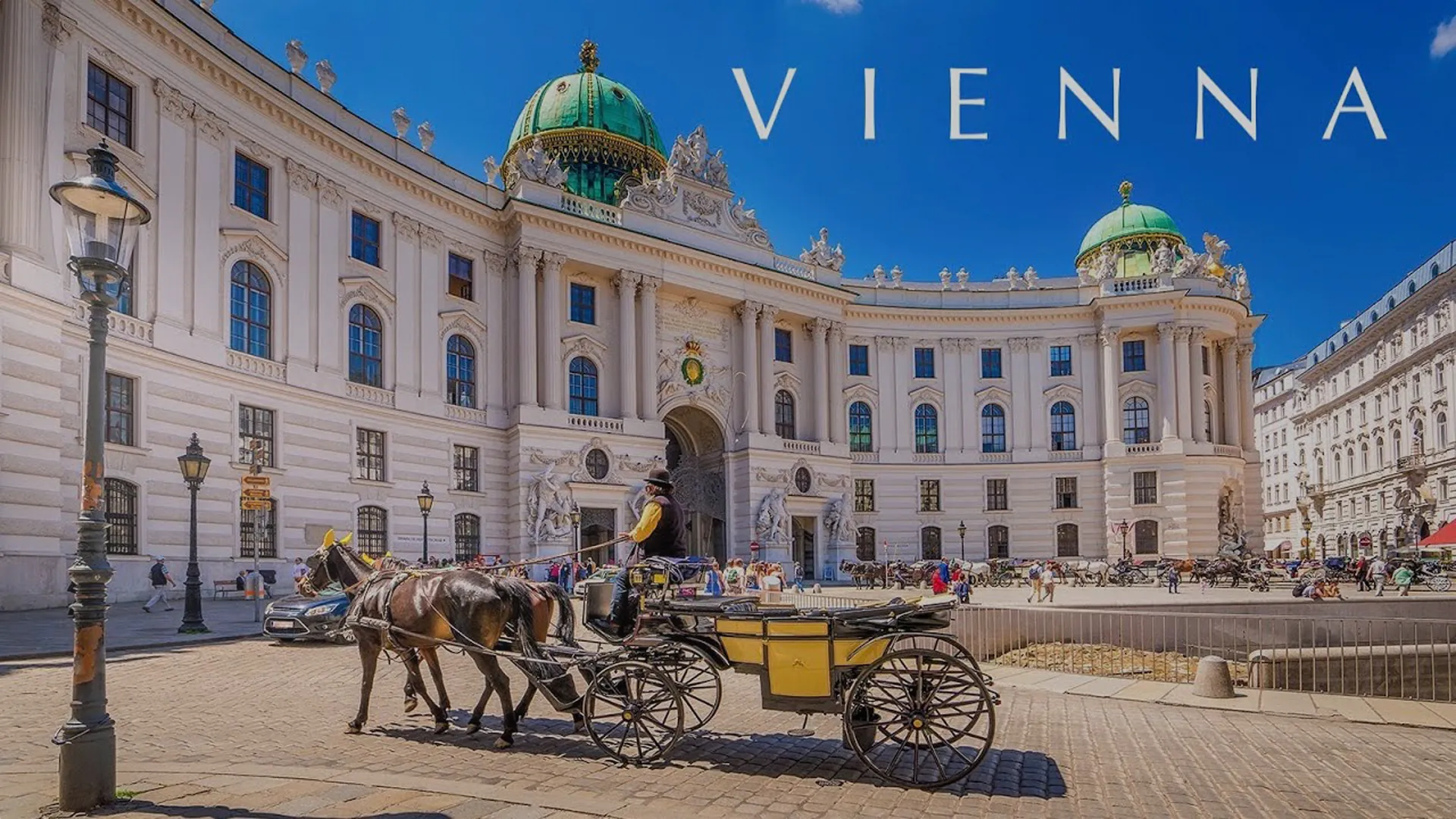
Vienna, 15–19 September 2026. The theme is “Re/Code Europe: The G20 Entrepreneur’s Mandate”. Tushar Tayal — entrepreneur, keynote speaker, and founder and CEO of Experience Travelidea — was selected in June 2026 for India’s delegation, nominated through CII Young Indians. He travels from Tezpur, Assam, roughly six thousand kilometres away.
0 km The distance an Indian passport has to negotiate before the meeting starts
The distance is not background to the story. It is the argument.
The delegation record
The verifiable facts of the selection, in one place, for anyone citing this page.
What the G20 YEA is
The G20 runs a set of engagement groups alongside the leaders’ summit — labour, business, civil society, science, women, youth. The Young Entrepreneurs’ Alliance is the founders’ group. Member countries each send a delegation. They meet once a year in the host country and negotiate a communiqué that feeds into the G20 process. India’s delegation is assembled by CII Young Indians.
It exists because of a gap that is easy to name and hard to close. Entrepreneurship policy — credit access, insolvency law, skilling, market entry, mobility — is written in rooms where almost nobody present has raised a first round or made a first hire. Founders are represented by proxy, usually by their success stories, a decade late. The YEA exists to shorten that distance: to put people currently running companies in front of the people currently writing the rules.
What he is taking into the room
Trade policy is well instrumented. Tariff lines, quotas, rules of origin, subsidy schedules — a negotiator can tell you what it costs to move a good across a border, to two decimal places. There is no equivalent line for what it costs to move the person who makes the good. That asymmetry follows from how the numbers get collected. A tariff is measured because somebody pays it at a border and a receipt exists. A visa refusal produces no receipt. The meeting does not happen, the order is not placed, the partnership does not form, and nothing is recorded. The cost is real. The ledger is blank.
The cost itself is not vague. It is a fee, paid up front, refundable under no circumstances. It is a wait of weeks, during which a founder cannot commit to a date. It is documentation: months of bank statements, tax returns, employment letters, confirmed bookings, insurance, sometimes an invitation notarised abroad. It is travel, because biometric enrolment happens in a handful of Indian cities, so an applicant in Assam flies to another state to give a fingerprint. And at the end, a refusal that need not state a reason and cannot be appealed — after which the fee is gone and the process starts again. Added up honestly, that is a levy on a person. It is simply not called one, so it is never negotiated.
He makes the case from a desk, not a paper. Experience Travelidea has been processing visa, corporate travel and study-abroad files since 2018, now with a team of 70. A visa desk is an unusual vantage point on trade. It sees the underside of the export statistics: the buyer who could not attend, the founder who withdrew from a trade fair after a refusal, the student who lost a year to an appointment queue. None of it appears in any account of bilateral trade. It appears as a phone call that stops coming.
The burden is also distributed unevenly, which is the part that gets missed. In Delhi, a biometric appointment is an inconvenience — an hour, a short journey, back at work by the afternoon. In Tezpur, the same appointment is a flight, a night in a hotel, two working days, and several thousand rupees spent before anyone has assessed the file. Identical fee, identical form, different price. The barrier scales with distance from an embassy, and India expects its next decade of growth from the places furthest from one. A system that works acceptably in three metros has not been solved for the country. It has been solved for the metros, and someone else is paying the difference.
Why this matters for Northeast India
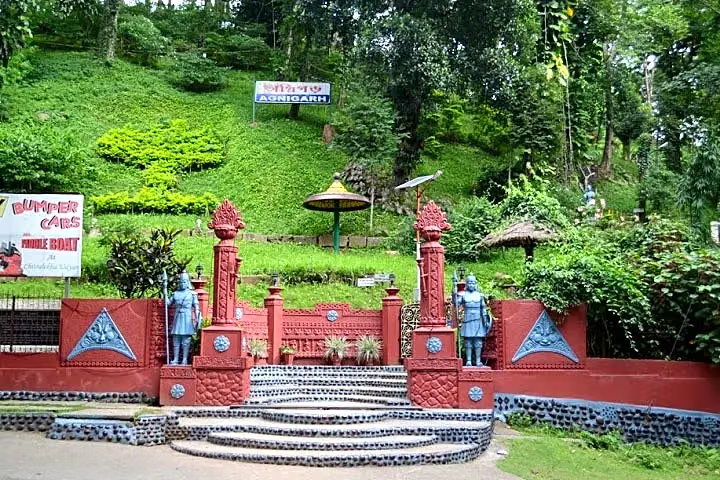
The region reads better on a map than on an org chart. Tezpur sits closer to Myanmar’s second city than to Delhi. The Northeast’s natural markets are east and south — Southeast Asian supply chains, tourism, education, freight — and every Act East document written since the policy was named says exactly that. Proximity is the region’s main structural asset.
Proximity without mobility is a line on a map. A highway to a border is not a trade route if the person driving it cannot get a visa to the country on the other side, or has to fly west to a consulate for permission to travel east. Roads, bridges and airports have had the attention and the budgets, rightly. The travel document has had neither. It is the cheaper problem, and until it is fixed the infrastructure carries less than it was built to carry.
Coverage
Press coverage of the selection and the summit will be listed here as it appears. [NEED: publication names]
From Vienna
To be written during and after 15–19 September 2026 — sessions, the delegation’s positions, and what the room actually sounded like.
What came out of it
To be written after the summit — the communiqué, commitments made, and what followed for Assam and for Travelidea.
Vienna is five days; the argument is one he has made from a visa desk in Assam since 2018. He speaks and trains on global mobility, cross-border business, and building a company far from the capital.