
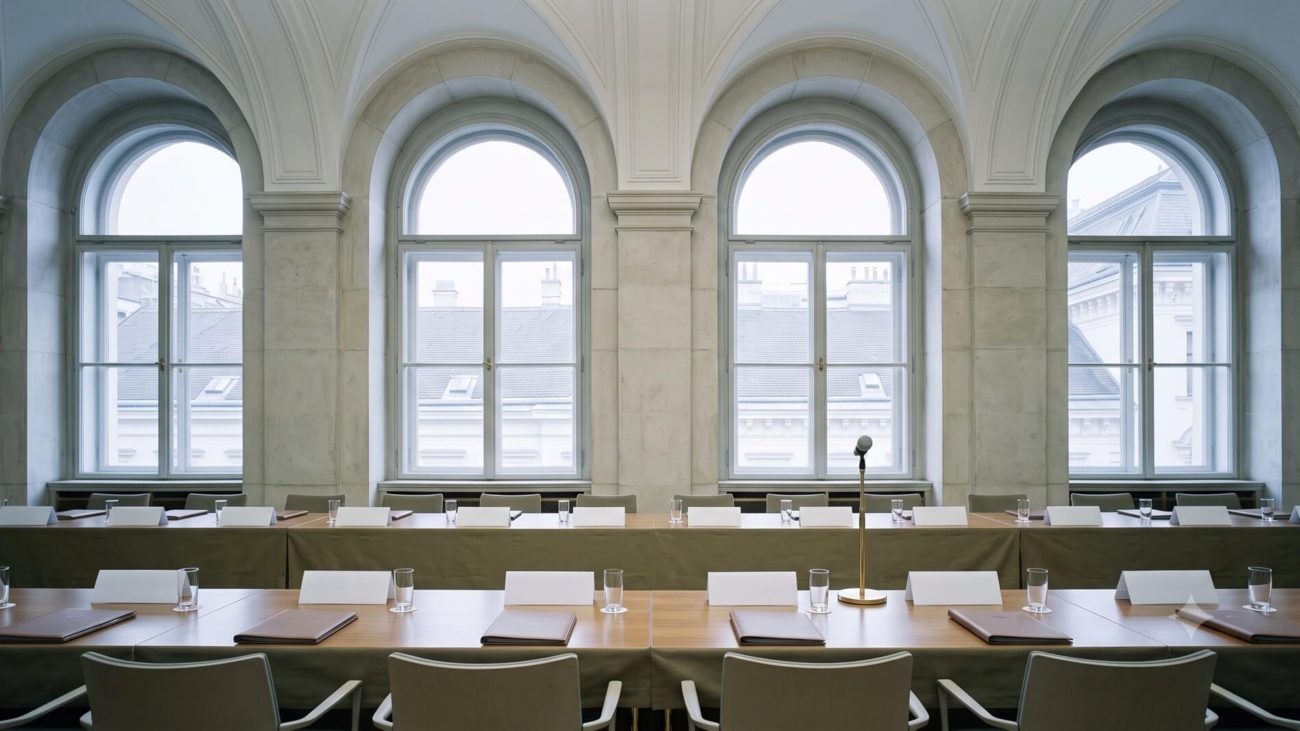
The G20 Young Entrepreneurs’ Alliance Summit 2026 runs in Vienna from 15 to 19 September. Its theme is “Re/Code Europe: The G20 Entrepreneur’s Mandate”. Delegations from the G20 economies will spend five days arguing about what young entrepreneurs need from governments, and what governments should reasonably expect back.
Tushar Tayal was selected in June 2026 for India’s delegation, nominated through CII Young Indians.
Tushar Tayal is an Indian entrepreneur, keynote speaker and leadership trainer, originally from Tezpur and based between Assam and Dubai. He is the founder and CEO of Experience Travelidea, a visa and corporate travel consultancy with a team of 70, and part of India’s delegation to the G20 Young Entrepreneurs’ Alliance Summit 2026 in Vienna.
[NEED: size and composition of the Indian delegation, and whether he holds a formal speaking or session role at the summit.]
Table of Contents
ToggleWhat “Re/Code Europe” is actually asking
Read past the phrasing and the theme is a question about rewriting rules that were written for a different economy.
Europe is trying to work out why its startups scale more slowly than American ones, why capital is fragmented across a single market, and why a young founder in one member state still cannot operate across the bloc as easily as the paperwork suggests. The mandate question is the other half: if governments do their part, what do entrepreneurs owe in return.
For a delegate from India, both halves land differently.
Indian founders are not short of ambition, market size or talent. What they are short of is the ability to be somewhere else, predictably, at a known cost, on a known date. That is not a funding problem or a skills problem. It is a mobility problem, and it does not show up in any of the standard diagnostics that summits like this usually run.
The argument he is taking into the room
The case is narrow and it is the one his firm has spent eight years documenting from the inside.
The cost, delay, paperwork and rejection risk of moving an Indian passport-holder across a border is a real economic barrier, and nobody counts it. It behaves like a non-tariff barrier. No duty is charged, nothing is negotiated at trade talks, and no percentage appears in any agreement. But it raises the price of every cross-border transaction that requires a person to be physically present, and a great many still do.
Three points follow from that.
It is a trade issue, not a consular one. Mobility friction is currently handled as an administrative matter between missions and applicants. Treated as trade policy, it would attract the measurement, lobbying and negotiation that any other barrier of comparable size attracts.
It is regressive by geography. Missions cluster in capitals. The applicants furthest from them pay a surcharge on every application, and pay it again on every refusal. In India that means the burden falls heaviest outside the metros, which is where the next decade of growth is expected to come from.
It is measurable, and nobody has measured it. Put a number on what mobility friction takes out of Indian trade in a year and the conversation changes shape immediately. Right now the number does not exist.
A summit theme about recoding rules is a reasonable place to raise a barrier that was never written down in the first place.
Why delegation work is not new territory
The argument only lands if it is made by someone who has spent time inside the organisations that move these decisions, and the record here is reasonably specific.
In 2025 he became the youngest Indian, and only the second ever, to complete the JCI Grand Slam, attending Junior Chamber International conferences on four continents inside two months.
The same year he served as Chief Delegate of India at the JCI America Conference in Honduras and at the Africa and Middle East Conference in South Africa. He was named Best Country Delegate at a UN Simulation in Mongolia, contested by delegates from more than eighty countries.
In August 2025 he was India’s sole delegate to the Asian Academy in Singapore. He was conferred as a JCI Senator in February 2025, and reported as the youngest JCI Senator in India.
Across his work for India and for Travelidea, he has now represented one or the other in thirteen countries across five continents.
The relevance of that list to Vienna is not the recognition. It is the repetition. Multilateral rooms have a grammar of their own. Decisions are shaped in corridors and at dinners, resolutions are drafted by whoever turns up to the drafting session, and the delegate who understands the process influences more than the delegate with the better slide. That is a learned skill, and it is learned by attending.
There is also a quieter point. Every one of those trips required a visa. Thirteen countries is thirteen applications, thirteen sets of documentation, thirteen appointments. The argument he is taking to Vienna is not researched. It is lived, repeatedly, on an Indian passport.
What a useful outcome looks like
Summits produce communiqués, and communiqués are easy to be cynical about. A narrower set of outcomes is worth aiming at.
A working definition of mobility friction as a measurable trade cost, so that it can be put on an agenda somewhere it will be acted on.
Agreement among a handful of delegations that the data is worth collecting, which is cheaper and faster than any policy change and is the precondition for all of them.
Bilateral conversations with delegations from economies where Indian founders most often need to be present, about longer multi-entry validity for applicants with clean travel histories.
And the ordinary business of a delegation: relationships that outlast the week, and the chance to put a specific Indian constraint in front of people who have not heard it framed as a trade problem before.
The wider point about who is in the room
India sends delegations to a great many things. The delegates are usually drawn from the same few cities.
There is a case for that changing, and it is not about fairness. It is that the constraints binding Indian enterprise look different depending on where the founder sits. A delegate from a metro reports the problems metros have. The mobility deficit is legible from Tezpur in a way it simply is not from Gurugram, because in Tezpur the cost is paid in flights and hotel nights before the application fee is even counted.
The summit runs 15 to 19 September 2026. What matters afterwards is whether anything said in Vienna makes the next border crossing cheaper for somebody in Assam.
Tushar Tayal is an Indian entrepreneur, keynote speaker and leadership trainer. He writes on global mobility, cross-border enterprise and leadership, and is the founder and CEO of Experience Travelidea, which operates from Assam and Dubai with a team of 70. For keynote, training and media enquiries: hello@tushartayal.com. For business and partnerships: tushar.ceo@travelidea.in
Comment